Transferable Skills for Your CV: Singapore Job Search
What if your skills could unlock opportunities you haven’t even considered yet?

At a Glance:
|
Future-Proof Your CV: Key Transferable Skills to Help You Stand Out
The short answer is: it probably does.
Let’s take a look at some examples of transferable skills and ways to make your CV shine.
What Are Transferable Skills?
The reason transferable skills matter so much during a career change is simple. They show an employer that you can come in, adapt, and contribute even without direct experience in that specific field.
Why Do Transferable Skills Matter?
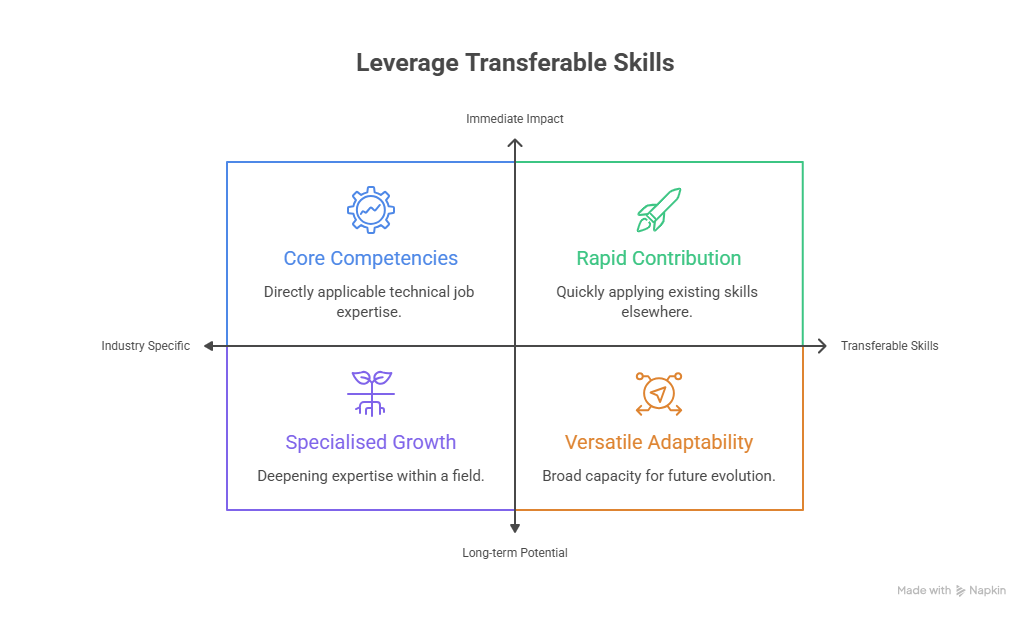
Here’s why they are so valuable:
Less Time To Get Up To Speed
When you bring solid foundational skills into a new role, organisations spend less time and money on basic training. That means you can start contributing meaningfully to the team sooner than someone starting completely from scratch. This also enables organisations to direct their resources towards providing specialised training tailored to their specific processes, systems, or technologies.
Shows Your Adaptability
Having transferable skills means you can apply what you already know to new situations. That kind of versatility is increasingly valuable in workplaces where roles and responsibilities shift more often than they used to.
Gives Employers Confidence in Your Abilities
Your track record of applying skills across different contexts gives employers more confidence in your ability to perform and settle into a new role, even without direct industry experience. This makes you a less risky hire.
Demonstrates Your Immediate Value
By leveraging your existing expertise, you can contribute value more quickly in a new role. With a strong foundation, you are often able to take on additional responsibilities sooner and may even support the training or mentoring of other team members, further increasing your value to the organisation.
Shows Your Long-Term Professional Value
Transferrable Skills to Include in Your CV
1. Communication
Being able to express yourself clearly, listen well, and build positive relationships with the people around you is something every employer values regardless of industry. This covers everything from writing a clear email to navigating a tough conversation with a client or colleague.
2. Collaboration
Most jobs involve working with other people in some way. Being able to contribute to a shared goal, respect different perspectives, and keep things moving as a group is a skill that travels across almost every workplace.
3. Leadership
Leadership is not just for managers. Taking ownership of a task, helping others stay on track, and being willing to step up when it matters are qualities that stand out in any role at any level.
4. Problem-Solving
Every job comes with problems to solve. This involves analytical thinking, creativity, and the ability to identify and evaluate potential solutions. When you highlight your problem-solving skills, you're showing that you can think critically, approach problems strategically, and help find effective solutions.
5. Adaptability
Priorities shift, new tools come in, and work environments evolve. If you can adjust, stay organised, and keep performing well through those changes, that is genuinely valuable in any workplace.
6. Time Management
Time management skills are all about being able to organise your workload, prioritise tasks, and meet deadlines efficiently. This means being able to plan, schedule, and juggle multiple responsibilities. If you can show that you’re good at time management on your CV, you’re showing that you can work independently, prioritise what’s important, and get things done on time.
7. Creativity
Creativity is all about coming up with new ideas, finding innovative solutions to problems, and thinking outside the box. This skill is useful for problem-solving, developing new strategies, and contributing to innovation. Showcasing your creativity on your CV means that you have the ability to think differently, bring fresh perspectives, and contribute to organisational growth.
8. Digital Literacy
Basic digital literacy is now expected in most roles. Proficiency in common tools like spreadsheets, word processing, or communication platforms is worth listing, especially when switching into industries that rely on digital workflows.
Identify Your Transferable Skills
- Identify 10 transferable skills that you exhibit.
- Reflect on how you've used these skills in your recent roles. Write it down. The more specific, the better.
- Once you have examples of how you've used these skills in the past, jot down any key achievements that resulted from your use of each skill.
Quick Tip! Browse job listings in the field you are considering and take note of the skills that keep coming up. Then run through the exercise above with those in mind. You might be surprised how much of it you already have.
And if you are drawing a blank, ask someone who has worked with you. A colleague, a former manager, even a close friend. The people who have seen you in action often have a clearer sense of your strengths than you do.
|
How to Add Transferable Skills To Your CV

Once you’ve identified the transferable skills you want to highlight, the next step is to weave them into your resume in a clear and intentional way. Here’s how you can do it:
- Professional Summary: Use a resume summary to open with the specific transferable skills that have made the most impactful difference in your career.
- Work Experience: For roles where these skills really showed up, make sure to add a bullet point stating so. And wherever you can, attach a key outcome to it.
- Skills Section: Keep this clean and categorised. For example: "Leadership: team development, conflict resolution, strategic planning." It makes it easier to read and signals that you understand how your skills fit together.
Your Next Career Move Might Already Be Within Reach
If you are not sure where to begin, our Career and Skills Advisors can help you work through that. From identifying your strengths to figuring out what skill gaps are worth closing, it is a good starting point before you make any big moves.
FAQs
Posted on 7/1/2026 9:00:00 AM
.jpg?sfvrsn=f9145dae_1)