Healthcare, Childcare & Social Services Careers in Singapore: Guide to the Growing Care Economy
Care work is the often overlooked foundation of every society.

The Rise of Care Careers in Singapore
There is no single path to a fulfilling career. Increasingly, mid-career professionals are taking charge of their next chapter by exploring new industries and finding opportunities that align with their goals and values.
One sector that has quietly gained momentum over the past decade is the care sector, where experienced professionals can make a meaningful difference while continuing to grow in their careers.
From supporting individuals and families to strengthening communities, careers in care offer diverse opportunities for those looking to make a positive impact while building a meaningful career. This guide explores why this might be the right time to make the move and what the transition could look like.
Healthcare Careers Offer Real Demand and Stability
In Singapore, healthcare is one of the fastest-growing employment sectors, with employment projected to grow 20% by 2030. The Ministry of Health (MOH) projects that this expansion is needed to meet rising demand from an ageing population and the continued growth of healthcare and community care services.
For mid-career professionals, the growth of the healthcare sector represents more than just an increase in job openings. It also means more structured pathways into the sector through initiatives such as Career Conversion Programmes (CCPs), employer-supported training, and other schemes designed for individuals moving into healthcare roles.
Just as importantly, many mid-career professionals already possess skills that healthcare organisations need. Management experience, problem-solving, communication, teamwork, and the ability to work under pressure are highly transferable across both clinical support and corporate functions.
Professionals entering the sector often bring maturity, adaptability, and real-world experience that strengthen healthcare teams and improve patient and operational outcomes.
Community Care: Healthcare in the Community
Much of Singapore’s healthcare demand is no longer concentrated in hospitals and clinics. As the population ages, a growing share of care is being delivered in the community, allowing seniors to age well while remaining connected to the people and places around them.
Community care encompasses a wide range of services, from active ageing centres and senior care centres to home-based care, rehabilitation services, disability support, and family health programmes.
Newer models such as Community Care Apartments, which combine senior-friendly housing with care and social support services, also reflect Singapore's broader shift towards delivering care closer to where people live.
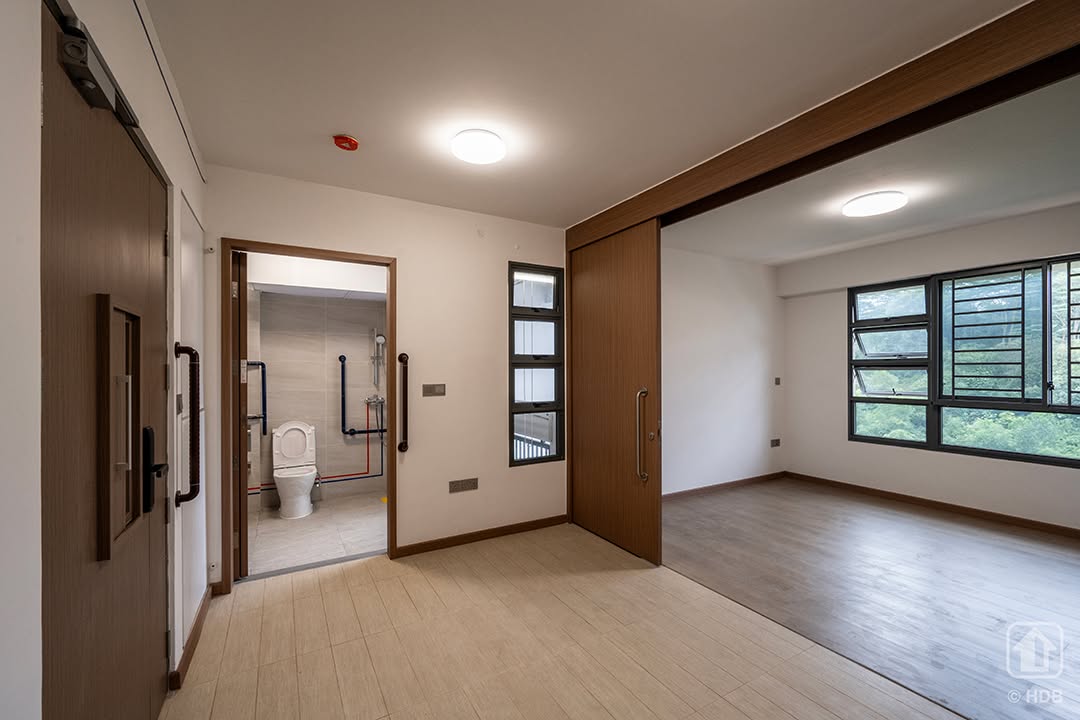
Source: Housing Development Board (HDB)
As these services continue to expand, so too does the need for professionals who can support them. Opportunities exist across both frontline and support functions, including care coordinators, community health workers, therapy assistants, programme executives, operations professionals, and service managers.
For mid-career professionals, community care can be an especially meaningful entry point into the healthcare sector.
Childcare Career Opportunities are Growing for Mid-Careerists
If you've been watching Singapore's childcare landscape, you've probably noticed the shift. Between 2025 and 2029, Singapore is adding almost 40,000 new full-day preschool places. That's not a small expansion, it's a significant commitment to supporting working families.
And it creates real demand for educators. Singapore will need about 3,500 new childcare educators by 2030 just to support this expansion and maintain quality standards.
Depending on the programme, training may be available on a full-time or part-time basis, making it easier to balance learning with work or family commitments. Rather than putting your life on hold, these pathways allow you to build the skills and confidence needed for a successful transition into the childcare sector.
Building Meaningful Careers In Social Services
Social service work spans supporting vulnerable families, working with youth, helping people with disabilities, and strengthening community resilience. It is work that requires skill, commitment, and empathy, and it is also work where the impact is often tangible and deeply meaningful.
In Singapore, the Ministry of Social and Family Development (MSF) and National Council of Social Service (NCSS) support a network of more than 20,000 professionals across over 500 social service agencies.
As social needs become more complex and Singapore’s population continues to evolve, the sector is expected to keep growing, creating demand for a wide range of roles and skill sets.
While many people associate social services only with social workers, the sector offers opportunities across a broad spectrum of functions. These include counselling, psychology, education, therapy, programme management, community engagement and fundraising, and other corporate services that keep agencies running effectively.
For mid-career professionals, this means there are multiple entry points into the sector, including roles that build on existing professional experience. Career transition support is also available through initiatives such as CCPs and SCTPs, alongside a range of NCSS-supported initiative such as scholarships, fellowships, and professional development opportunities designed to help individuals enter and grow within the industry.
The Rise of the Care Economy
One of the biggest misconceptions about care careers is that they are limited to nurses, preschool teachers, or social workers. In reality, every care organisation also depends on professionals services such as finance, human resources, communications, IT, partnerships, and programme management.
That means a mid-career switch into the care sector does not always require starting from scratch. Experience gained in your field can often be applied in care-related settings.
And career switchers are already making the move. From 2022 to 2024, around 1,600 people transitioned into care roles through Career Conversion Programmes (CCPs), while more than 1,700 completed SkillsFuture Career Transition Programmes (SCTPs) designed to support transitions into the sector.
Posted on 7/31/2026 12:00:00 AM
.jpg?sfvrsn=baa0070_1)