AI is Changing Work in Singapore: The Emerging Skill Gaps
Singapore is going all in on AI, are your skills ready?

At a Glance
|
AI is Rewriting How Work Works
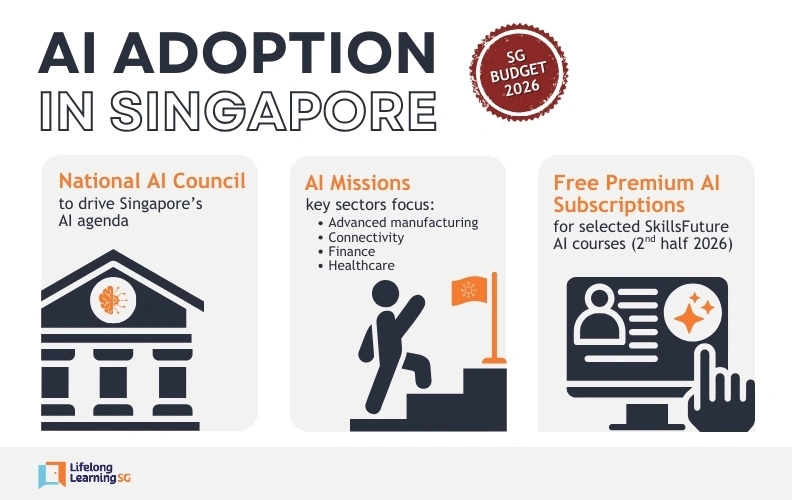
Why Professionals Feel Stuck
The real challenge isn’t a lack of effort. It’s knowing how to integrate AI into everyday workflows in ways that create tangible value.
How AI Is Changing Work
In practice, AI is showing up in everyday work in tangible ways:
- Daily Workflows: Streamlining routine tasks like drafting reports
- Employer Expectations: Growing expectations for AI literacy
- AI Access: Training programmes and tools that help you build practical skills
The key is to see AI as a teammate rather than the enemy. It is a tool that helps you continue to grow in your career.
The New AI Skill Gaps at Work
Here are the key areas where these skill gaps often show up:
1. Translating Experience Into AI Use
By identifying which of your current tasks can be augmented with AI, you can bridge your existing skills into new, more AI-driven responsibilities. This approach is particularly relevant for mid-career professionals who want to adapt to evolving roles or safeguard against redundancy in areas where AI is automating routine work.
The actionable step: Map your routine tasks to areas where AI can assist, and practice applying tools on real projects.
2. Bridging the “Missing Middle”
The actionable step: Look for opportunities to demonstrate leadership by volunteering for projects or coordinating tasks between colleagues, and show ownership of your work by reviewing AI outputs for accuracy and improvement before they move to the next stage.
3. Applying Skills Effectively
The actionable step: Use your AI skills on real tasks, making sure to add your own judgment, insights, and refinements. Using AI isn’t lazy, it only becomes so if you skip critical thinking or rely on it entirely.
4. Elevate Your Soft Skills
The actionable step: Focus on areas where your human insight adds value: client interactions, creative problem-solving, and strategic decision-making.
How to Analyse Your Own Skill Gaps
Make a list of your daily work tasks and ask yourself:
- Which parts of my work are repetitive that AI could take over?
- Which responsibilities require judgment, creativity, or relationship-building? How can I strengthen my contribution in these areas?
- Where can I strategically apply AI to improve decisions, boost efficiency, and enhance the work quality?
These questions may seem similar at first, but each focuses on a different aspect of your role. Take the time to write out examples for each and the differences will become clearer as you reflect.
It can also help to stay connected with industry trends and emerging AI skills. Attending relevant learning events, workshops, or seminars — such as those offered by Lifelong Learning Singapore — can provide new perspectives on how industry peers are applying AI in practice, and give you ideas for where to focus your own development.
Taking Ownership of Your Skills
FAQs
It’s natural to worry about automation. In most cases, AI will change how work is done rather than fully replace roles. The key is to stay adaptable and focus on skills that complement AI, such as problem-solving, communication, and critical thinking, so you can thrive as roles evolve.
AI is changing the way we work, and it’s natural to wonder where to start. The good news is that Singapore is actively building pathways to help workers adapt in this fast changing landscape. There are programmes designed for different experience levels, from introductory AI and digital literacy courses to industry focused training that equips you with real skills employers are looking for.
Before signing up, consider how AI skills relate to your current job or career goals. With strong interest in AI, many providers are promoting courses, so take the time to understand what each course covers and whether it will genuinely benefit you. Make sure it supports your learning objectives, rather than committing just because of hype or external pressure.
It’s never too late to start. You can begin with foundational AI or digital literacy courses to build confidence. Focus on understanding how AI tools can support your existing work, rather than trying to become an “AI expert” overnight.
AI can be a powerful tool to support career changes, such as moving into FinTech, analytics, or other data-driven roles.
Posted on 3/19/2026 9:00:00 AM