Top AI Skills of 2025 That Will Define 2026 and Beyond
How is AI changing the day-to-day reality of work?
In-Demand AI Skills That Set the Stage for 2026
2025 was the year we witnessed the unprecedented rise of Artificial Intelligence (AI), and this momentum is not just continuing— it is accelerating. In 2026, AI will reach every corner of our lives, becoming firmly embedded in workflows across organisations of all sectors. Meanwhile, millions of us are already relying on it for research, study, content creation, and even idea generation.
Singapore is right in the thick of it. A 2023 report by IMDA revealed that 44% of large companies here have already integrated AI into their operations, highlighting its growing importance in the business world today.
As AI reshapes the future of work, it brings exciting opportunities for learning and growth. Developing AI skills can open doors to new career paths, enhance your professional impact, and even boost earning potential. In fact, a study by Access Partnership suggests that Singaporean workers with AI skills could see their salaries rise by more than 25%. This shows just how valuable it is to invest in these skills if you want to stay ahead in today’s job market and make the most of the AI-driven future.
Why Everyone Should Have AI Skills
AI isn't just changing our jobs, it's creating entirely new careers across all industries. Early predictions already suggest a massive shift, with IBM even projecting that around
40% of professionals will need to learn new skills by 2027 just to keep pace with how AI is transforming the workplace.
With AI fast becoming such a fundamental part of almost everything, these skills aren't just for the tech wizards anymore. They're becoming something nearly everyone will need. If you want to confidently navigate our evolving job market and stay competitive here in Singapore and globally, having a basic grasp of AI and its tools will become increasingly important for professionals in every single field.
Benefits of Using AI-Driven Analytics Tools
Now that a basic grasp of AI is so important, how can you leverage it in your daily work? One of the most practical and impactful ways is through AI-driven analytics tools. These tools are transforming how we work, offering powerful insights that can give you a real edge.
Here’s how these smart tools can empower you as an individual:
- Boost Decision-Making: They help you quickly sift througsh vast amounts of data, highlighting key trends and patterns so you can make faster, more informed choices.
- Enhance Productivity: By automating data analysis and reporting, these tools free up your time from tedious tasks, allowing you to focus on higher-value work.
- Uncover Hidden Opportunities: AI can spot connections and insights that a human might miss, helping you discover new areas for growth or efficiency in your projects or role.
- Personalise Learning and Development: Some tools can even analyse your performance and suggest tailored learning paths or resources, helping you continuously improve.
2025 AI Trends You Can't Ignore
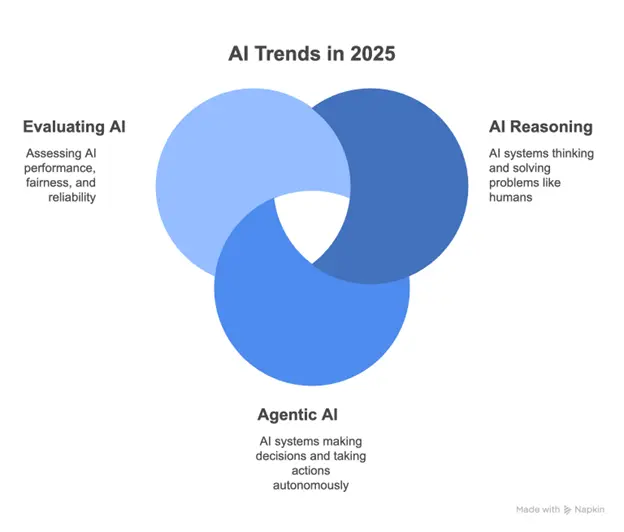
Looking back at the year, several key AI trends have emerged. Here's what you should keep in mind to stay ahead of the curve:
- AI Reasoning: This is about AI systems getting smarter at thinking and solving problems more like humans do. It means AI won't just follow rules or spot patterns; it'll start to understand context, make logical inferences, and justify its decisions, which can lead to much more sophisticated applications.
- Agentic AI: Imagine AI that can not only generate content but also independently make decisions and take actions to achieve a goal. This is Agentic AI – systems that can operate autonomously within workflows, learning and adapting without constant human oversight, opening doors for advanced automation.
- Evaluating AI: As AI becomes more powerful and widespread, knowing how to properly assess its performance, fairness, and reliability becomes critical. This involves understanding how to test AI models, identify biases, and ensure they meet ethical standards and real-world expectations, making sure these smart tools are doing what they're supposed to and doing it safely.
What Are AI Skills?
At its core, having AI skills means you know how to work smart with artificial intelligence. This covers both the technical side, like knowing how to build AI systems, and the broader ability to use these AI tools in different roles and industries.
Think of it in two parts:
- Technical Foundations: This involves understanding the nuts and bolts of AI – things like how to design, develop, and deploy AI models. It involves knowing about machine learning algorithms, data science, and the programming languages that bring AI to life.
- Augmenting Human Expertise: This focuses on how you actually use AI tools to make your own work better, faster, or smarter. It's about leveraging AI to analyse data, automate tasks, generate insights, and essentially enhance your human capabilities, rather than replacing them
8 High-Demand AI Skills for the Next Five Years
So, if you're ready to put those AI concepts into practice and really make an impact, what specific skills should you zero in on? Here are 8 top AI skills that will seriously help you stay ahead of the curve over the next five years.
1. Prompt Engineering
With generative AI becoming more common, knowing how to tell models like ChatGPT what you want is key. Prompt engineering is all about crafting clear and specific instructions to get AI to give you better results, which can save you time and effort.
For instance, instead of just asking "Write about healthy eating," a prompt engineer would craft something like: "Generate a 300-word blog post for busy parents on easy, budget-friendly healthy dinner ideas, including at least one vegetarian option and a call to action to try a new recipe this week. Use an encouraging and slightly informal tone." This precision helps you get exactly what you need, much faster.
Essentially, anyone working in content creation, marketing, customer service, or even just daily business communication can seriously benefit from mastering this skill.
2. Natural Language Processing (NLP)
Natural Language Processing (NLP) helps machines understand, analyse, and even generate human language. Basically, it lets computers "read" and "speak" just like us! It forms the backbone of so many AI interactions you probably use every single day. For example, think about how your phone's voice assistant understands your spoken commands, or how your email sorts out spam before it even hits your inbox – that's all thanks to NLP working its magic behind the scenes.
Because NLP gives machines this incredible ability to process human language, it's a game-changer across a huge range of fields. Professionals who master NLP are crucial for building and improving all sorts of user-friendly AI systems, from smart
chatbots that handle customer queries to advanced voice assistants you talk to daily. You'll find these skills creating significant career opportunities in customer service, marketing, healthcare, legal tech, and any industry dealing with vast amounts of text or spoken data.
3. Machine Learning Fundamentals
Machine Learning (ML) fundamentals involve really understanding the core algorithms that let AI learn from data, spot patterns, and make predictions all on its own, without us having to programme every single step. It's all about figuring out how AI can automatically improve as it gains more experience.
Consider your favourite streaming service: it suggests movies or shows you might like based on your viewing history. That's ML actively working behind the scenes, continuously learning from user behaviour to make better predictions about what you'll enjoy next.
Mastering these fundamentals truly equips you to dig into data, uncover valuable insights, and even help build systems that can predict future trends. These skills make you a super valuable asset in virtually any data-driven sector, including finance, healthcare, retail, manufacturing, and even marketing, where understanding patterns and making smart predictions drives success.
4. AI Ethics and Compliance
We need to develop and use AI systems in a way that's fair, transparent, and always follows the rules. This is absolutely key to building trust in the technology and keeping any potential downsides to a minimum. Think about it: in the financial sector, ensuring AI algorithms for things like credit scores remain unbiased is vital. And in healthcare, protecting patient data when AI helps with diagnoses? That's a must.
The push for responsible AI isn't just a trend; it's a huge focus across countries worldwide. And right here in Singapore, we're definitely committed to ensuring responsible AI development and use. Just look at the
PDPC's 'AI Verify' framework – it actively helps ensure AI systems are trustworthy and sets a strong example. Because of this global push and our own strong commitment, we need more professionals who truly grasp AI ethics and compliance. They actively help organisations navigate the regulations and build confidence among users. This, in turn, opens up clear career paths in areas like risk management, legal tech, and specialised compliance roles, ensuring we use AI both ethically and correctly.
5. AI-Driven Data Analysis
With the massive amounts of data we're all collecting now, finding important insights is more crucial than ever. AI-driven data analysis actively uses smart tools to sift through massive datasets, finding hidden patterns that help us make much smarter decisions.
Picture this: Major retailers like Walmart use AI to forecast exactly what customers will buy next, ensuring shelves are always stocked efficiently. Or consider how logistics companies optimise complex delivery routes by analysing real-time traffic and demand data. That's AI-driven data analysis actively transforming operations.
If you're skilled in AI-driven data analysis, you actively help organisations make much smarter, data-backed choices. This creates significant career opportunities in fields like data science, business intelligence, and even analytics management, where insights literally drive strategy and growth across virtually every sector.
6. Mastery of Generative AI Tools
Knowing your way around generative AI tools like ChatGPT, GitHub Copilot, and LangChain is quickly becoming a huge advantage for professionals. These platforms actively use AI to boost how much individuals and teams can achieve, and they also spark fresh ideas across all sorts of industries.
Just look around – more companies in Singapore are turning to ChatGPT to create content and write copy efficiently. At the same time, software developers are actively using GitHub Copilot to write code faster and get really helpful suggestions. And many businesses are now exploring LangChain to build their own custom AI-powered applications, making their workflows smoother and sparking new innovations.
If you're good at leveraging these tools, you can actively boost your productivity, spark more creativity, and uncover innovative solutions, giving you a serious edge in your field.
7. AI-Enhanced Cybersecurity
Applying artificial intelligence to cybersecurity lets us spot threats before they even happen, which ultimately helps us stop fraud and data breaches. In the financial industry, for example, AI-powered tools are super critical for catching and preventing fake transactions as they occur.
And beyond that, cybersecurity companies are actively using AI to scan network traffic for anything that looks out of place, helping them pinpoint potential attacks before they can cause any real damage.
As cyber threats that use AI become even more sophisticated, we desperately need professionals who truly understand AI-enhanced cybersecurity to keep organisations safe. This creates significant career opportunities in fields like cybersecurity analysis, threat intelligence, and security architecture, where you directly protect vital digital assets.
8. AI Programming and Coding
If you really know your way around programming languages like Python and R, and you're comfortable with AI frameworks like TensorFlow and PyTorch, you've got the practical skills to actively build AI. Python, for instance, is a go-to for creating all sorts of AI applications across industries, while R really shines for statistical analysis and building robust machine learning models, especially in finance and research.
Then there are TensorFlow and PyTorch – these are crucial tools for making big leaps in deep learning, powering things like advanced computer vision and natural language understanding. Mastering these truly opens doors to roles like AI developers, machine learning engineers, data scientists, and even researchers – basically, all the people actively driving innovation and building the next generation of AI-powered solutions.
Emerging AI Job Roles
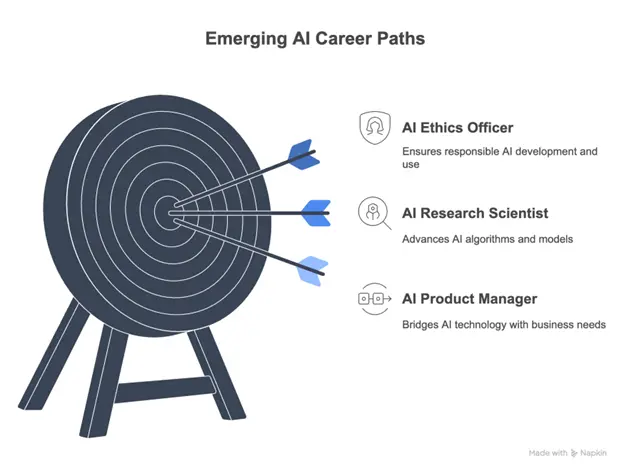
Looking at all these powerful AI skills, you might be wondering, what kind of exciting career paths can you actually carve out for yourself? The world of AI is rapidly expanding, opening up entirely new roles that truly need your unique expertise.
Here are some emerging but in-demand AI careers you could pursue:
- AI Product Manager: These professionals bridge the gap between technical AI development and real business needs. They actively define, oversee, and launch AI products, making sure they solve actual problems and hit market demands.
- AI Research Scientist: If you love exploring the unknown, this role might be for you. AI research scientists actively push the boundaries of AI, developing new algorithms, models, and theories to advance the entire field, often working in cutting-edge labs.
- AI Ethics Officer: With AI’s growing influence, this role is becoming incredibly important. AI ethics officers actively ensure AI systems are developed and used responsibly, fairly, and in compliance with ethical guidelines and regulations, ultimately building trust in the technology
Bridging the AI Skills Gap
The rapid growth of artificial intelligence across all industries has created a huge mismatch: businesses urgently need people with AI capabilities, but not enough professionals currently possess them. This is what we call the 'AI skills gap.'
If you’re looking to get into AI or boost your current role with AI expertise, this gap represents both a challenge and a huge opportunity. It means that while the demand for these roles is high, you'll need to actively equip yourself with the specific skills employers are looking for to truly step into this evolving landscape. Bridging this gap isn't just good for the economy; it's a direct pathway to your own career advancement.
How to Learn In-Demand AI Skills
For mid-career professionals in Singapore aiming to remain competitive, actively bridging the AI skills gap is essential for future career growth. Thankfully, there are a number of ways you can do it.
SkillsFuture Courses
Thanks to our strong network of training partners, SkillsFuture courses ensure you get quality learning every step of the way. As Singaporeans, you can tap into SkillsFuture subsidies and even use your SkillsFuture Credit to offset course costs. This means you get to:
- Stay Relevant: Acquire the latest skills to keep pace with our fast-changing job market.
- Access Affordable Learning: Benefit from subsidised training opportunities, making quality education more accessible.
- Explore Diverse Courses: Choose from a wide range of courses offered by reputable providers, covering everything from creative applications like content creation and prompt engineering to more technical skills like using Python for deep learning.
AI Apprenticeship Programme
The AI Apprenticeship Programme (AIAP) is a programme by AI Singapore designed to cultivate local AI talent. It offers a blend of in-depth training and practical, real-world project experience. If you've got some existing knowledge and need a more hands-on approach to really launch or advance your career in the AI field, this program can be incredibly valuable.
Online Platforms
There are a ton of online learning platforms offer excellent AI-related courses and specialisations, both paid and free. Big names like Coursera and edX, for example, host courses from leading global universities and institutions, with some even eligible for SkillsFuture funding. Plus, you'll find platforms such as Google AI and LearnAI (from AI Singapore) that provide fantastic free introductory resources if you're just dipping your toes in.
Futureproofing Your Career Goes Beyond AI Upskilling
As technology continues to advance rapidly, particularly with the rise of AI, it's easy to focus solely on technical competencies. However, leveraging these powerful tools effectively also requires a strong foundation in human-centric skills. This includes critical thinking, problem-solving, communication and even ethical decision-making.
These uniquely human abilities allow us to direct AI tools the right way, innovate responsibly and navigate complex challenges. Growing these skills ensures that we can adapt, collaborate and add strategic value in a world increasingly shaped by artificial intelligence.
Stay Ahead with Lifelong Learning
Learning AI skills is a vital move, now more than ever, but your learning journey shouldn't stop there. The field of artificial intelligence is constantly advancing, so staying ahead in Singapore's dynamic job market requires a commitment to
lifelong learning. By being proactive and adapting to the new AI developments, you'll enjoy sustained career growth and remain a relevant and valuable professional in the years to come.
Explore our
Career & Skills Advisory (CSA) to discover how you can best invest in your future and gain those in-demand skills. Also, make sure to keep an eye out for free AI
workshops and events at Lifelong Learning Singapore (LLSG). Don't delay, start your transformation today!
Posted on 12/10/2025 9:00:00 AM